

Article: The Jaeger-LeCoultre Powermatic Power Reserve (Cal. 481)
The Jaeger-LeCoultre Powermatic Power Reserve (Cal. 481)
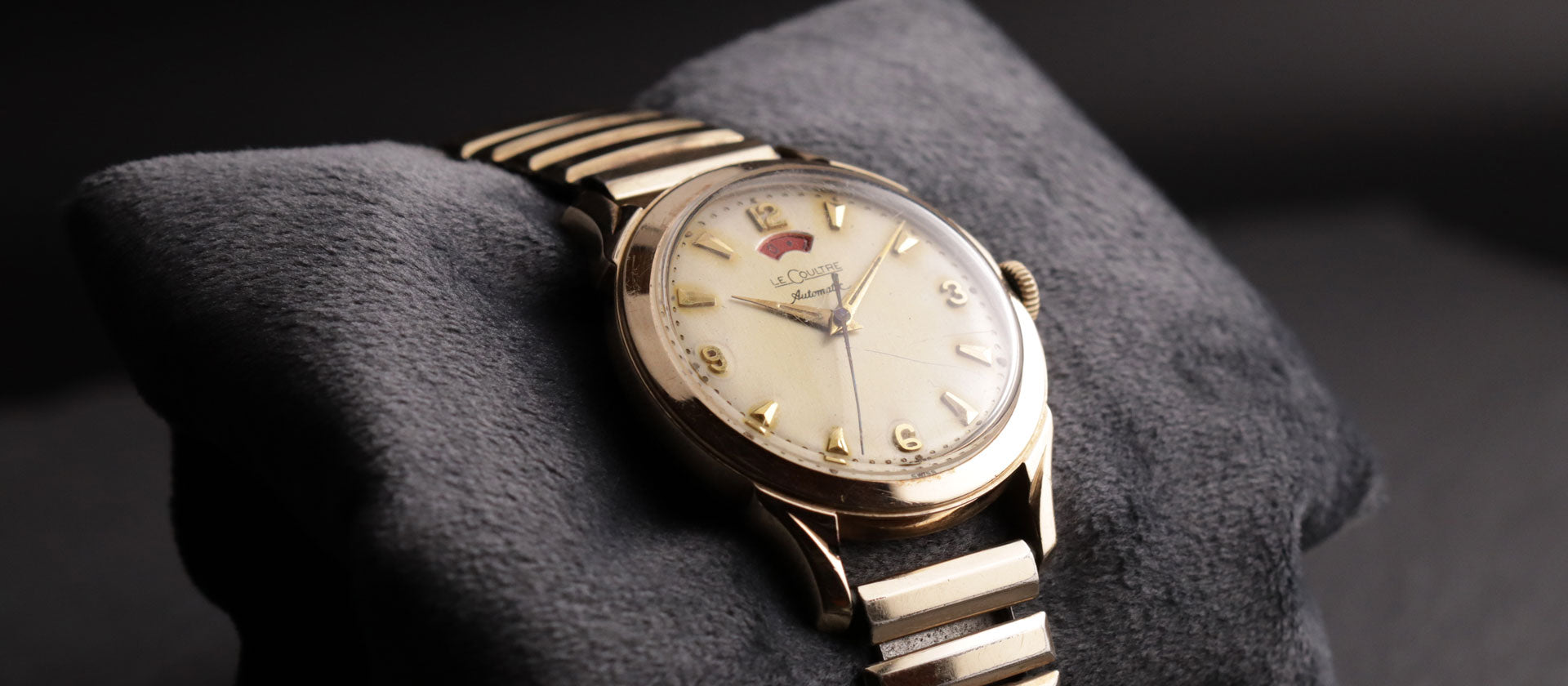
It is only fitting for our first Well Worn Watch review to feature the Jaeger-LeCoultre Powermatic Power Reserve, Caliber 481. This 10K Gold-filled, 17 jewel automatic watch is a true gem in the world of horology, combining timeless design with impressive technical specifications.
One of the standout features of this watch is its automatic movement, which ensures precise timekeeping without the need for manual winding.

History
Sold in the United States under the name of LeCoultre during the 1940s and 1950s, Jaeger-LeCoultre's Powermatic was a mechanical, technological, and horological masterpiece.
Powered by their legendary Caliber 481, the Powermatic housed an integrated power reserve complication that displayed how much power was stored in the main spring.
The Powermatic also featured a charming "bumper" rotor that thuds to-and-fro with your every wrist motion. However, this movement feels broken to the unacquainted. Moving the watch side to side reveals what feels and sounds like a movement that has broken loose in the case. But it is, in fact, not broken at all.
To wind this watch, one need only move the watch back and forth (better yet, wear it or put it in a watch winder) and soon enough the power indicator reveals the energy stored in its main spring as it's wound tighter.
This LeCoultre, which currently resides in my collection, was designed so well that it still functions and runs accurately, after all these years.

The French Connection
Jaeger-LeCoultre was fundamentally a Swiss luxury watchmaker, founded in Switzerland by Antoine LeCoultre in 1833. But its name reflects a significant French connection through the 1903 partnership with Parisian watchmaker Edmond Jaeger, creating a true Franco-Swiss collaboration known for technical prowess and style.
The company started in the Vallée de Joux, Switzerland, a heartland of watchmaking, when Antoine LeCoultre began making movements. Edmond Jaeger, a French watchmaker, brought Parisian design flair to the collaboration, leading to innovations like the world's thinnest watch.
The name Jaeger-LeCoultre was formalized in 1937, uniting Swiss precision with French artistry.

A Personal Connection
Still a sought-after timepiece by collectors and watchmakers, this particular LeCoultre Powermatic is very personal to me.
My father wore this watch around the house, gently winding the automatic movement as he moved about, often wearing it on his right wrist when his Rolex was on his left. I got the impression he valued this LeCoultre more than his DateJust, as I believe the PowerMatic was his father's.
In fact, it became his most well worn watch, and it still brings me joy to see the wear, the scratches, and the daily "use" these imperfections recorded.
This connection is especially important since my grandfather and father had a wonderful relationship. Grandpa Tobler spent a lot of time fishing with Dad, and playing music together for fun and professionally: grandpa on tenor sax and Dad on trombone.
Dad would go on to play at the St. Louis Symphony and for some of the biggest names in show business — Frank Sinatra, Tony Bennett, Aretha Franklin, Ray Charles, Elvis, and many more. He was recognized as a top-tier musician by other top musicians, nationwide.
From there, Dad mentored many young people in the art of music for decades. His love and appreciation for excellence were also on display in his musical career.

Through it all, one constant remained. Grandpa Tobler spent quality time with Dad, and that time spent well transformed Dad into a man who impacted the lives of so many for the good by the end of his life. I am only one of many he affected positively. And I was privileged to witness his impact on others firsthand.
When his LeCoultre made its way to my collection, I knew very little about it. Furthermore, finding information about such an old watch was difficult. But the more I found, the more I fell in love with it. My admiration for its rich history, cutting-edge technologies, and understated elegance captured my attention even further.
The Jaeger-LeCoultre Powermatic is a timepiece that exudes elegance and sophistication with technical prowess unlike any other at the time. But, for me, it is a symbol of two men who knew and appreciated excellence in watches, in relationships, and in time well spent investing in the lives around them.
Classic Design
This Jaeger-LeCoultre Powermatic model features an elegant design that never goes out of style. Though the diminutive case size of 34mm is almost unwearable today with most watches measuring 39mm to 44mm, the gold-filled case and dial design adds a touch of luxury, without bling.
The Power Indicator at 12 o'clock adds a unique and functional element to the watch face. The sleek hands and markers make it easy to read the time at a glance, perfect for the modern gentleman on the go. I love everything about this watch, yet I find myself wishing it were a little larger to match my wrist size.

Technical Specifications
Since Jaeger-LeCoultre was known as a "watchmaker for watchmakers," you can imagine there is more to this watch than first meets the eye. Let's break it down:
- Movement: Automatic, 17 Jewels
- Caliber: 481 "Powermatic"
- Self-winding Mechanism: "Bumper" rotor
- Dial: Champagne/satin gold-tone with power reserve under 12 o'clock mark, "LeCoultre Automatic" logo beneath power indicator
- Indices: Applied Arabic numbers at 15-minute intervals; dagger indices at 5-minute intervals
- Hands: Dauphine hands (an elegant watch hand style characterized by their graceful, tapered triangular shape, sharp points, and facets that catch light for excellent legibility)
- Power Reserve: Indicated at 12 o'clock position: shows white when charged; displays red when charge is waning or non-existent
- Case Size: 34mm
- Case Material: 10K Gold-filled (yellow-gold)
- Water Resistance: Supposedly 30m (probably best to keep this beauty away from water at its age)
- Manufacturer/Watchmaker: Jaeger-LeCoultre (sold under this name in European markets, but sold under LeCoultre in the US market)
- Date Manufactured: c. 1950 (sold through the late 1940s and into the 1950s)
Why You Need this Timepiece in Your Collection
Aside from its stunningly minimalistic design and unique features, this Jaeger-LeCoultre c. 1950s model is a piece of horological history. Owning this watch is like owning a piece of the past, a reminder of the craftsmanship and attention to detail that went into exquisite watchmaking during the mid-20th century.
It's also a reminder of how diminutive men's wristwatches were back then. And how well-designed and crafted these timepieces are. This one still runs with near perfection.
Owning and wearing a vintage watch like this is a surefire way to stand out from the crowd. In a sea of modern smartwatches and the ubiquitous Rolex Submariners, donning a classic like the Jaeger-LeCoultre 1950s model is a statement of style, sophistication, and simplicity.

Final Thoughts
If you're looking for a watch that whispers vintage bespoke charm and exudes understated elegance, the Jaeger-LeCoultre gold-filled Powermatic automatic watch with the power indicator at the 12 o'clock position is the perfect choice. It's a timeless classic that will never go out of style.
If this is your style, go ahead and treat yourself, if you can still find one. And enjoy a piece of horological history and mechanical mastery. You won't regret it.

Written by Jeffrey Tobler